

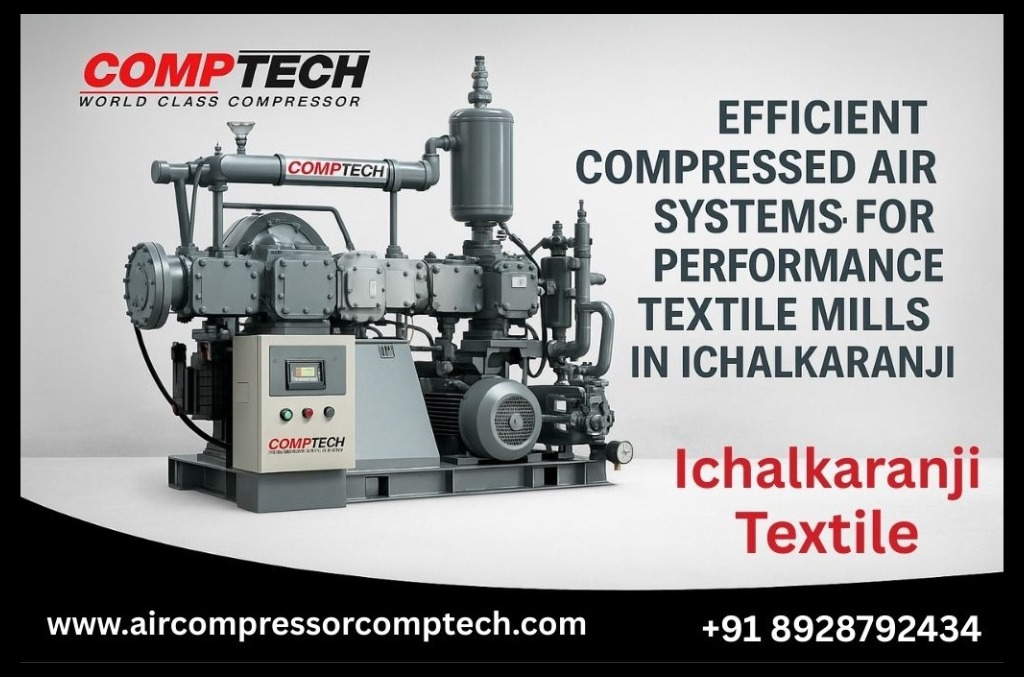
Efficient Compressed Air Systems for High-Performance Textile Mills in Ichalkaranji
Ichalkaranji has earned its reputation as a powerhouse of India’s textile sector, with thousands of looms, spinning units, knitting workshops, and processing houses running round the clock. To maintain this massive output, textile factories rely heavily on air compressors, which provide the stable and clean airflow required for precise fabric manufacturing.
Why Compressed Air Is Essential in Ichalkaranji’s Textile Cluster
From powering air-jet looms to driving pneumatic controls, compressed air is the invisible force that keeps a textile unit running smoothly. With strict delivery schedules, continuous operations, and the presence of fine cotton dust, mills need a compressor system that offers reliability, durability, and energy efficiency.
Core Benefits of Air Compressors for Textile Units
• Enhances loom speed, accuracy, and fabric consistency.
• Supports smooth yarn movement and machine automation.
• Reduces downtime and prevents loss of production due to mechanical failures.
• Ensures cleaner operations by replacing manual handling with pneumatic tools.
• Cuts energy cost when paired with advanced air management systems.
Major Applications of Compressors in Textile Manufacturing
Textile units in Ichalkaranji use compressed air for air-jet weaving, ring spinning, warping, knitting, dyeing and bleaching, pneumatic winding, fabric inspection, and final packaging.
Maintenance Tips for Ichalkaranji’s Climate & Operating Conditions
Ichalkaranji’s humid weather, cotton particles, and long production shifts require special care:
1. Inspect and clean air intake filters twice a week.
2. Drain condensation from air receivers regularly.
3. Maintain oil level and use moisture-resistant lubricants.
4. Keep compressor rooms dust-free with proper ventilation.
5. Check for power imbalance and secure all electrical connections.
6. Tighten belts and inspect pulleys for wear.
7. Check dryer performance to avoid moisture entering loom lines.
Safety Guidelines for Mill Owners
Set pressure limits correctly, monitor compressor temperature, ensure safety valves work, avoid pipe overloading, and train operators to observe alarms and emergency shutoff procedures.
Energy Efficiency Tips
Use VFD-controlled screw compressors, fix leaks in distribution lines, use optimal hose diameters, install heat recovery units, and choose the correct CFM and HP rating for your looms.
Best Compressor Types for Textile Mills
• Rotary Screw Compressors for continuous loom operations
• High-CFM Reciprocating Compressors for heavy pneumatic loads
• Oil-Free Compressors for dyeing and clean processing areas
________________________________________
Comptech Compressor Presence Ichalkaranji Local Area
Best Air Compressor for Textile Mill in Khanjire Mala Ichalkaranji
High CFM Compressor for Power Loom Units in Padmavati Nagar Ichalkaranji
Screw Compressor Supplier in Yadavnagar Ichalkaranji
Textile Compressor Dealer in Janta Nagar
Air Dryer & Compressor Solutions in Kagwade Mala Ichalkaranji
Compressor for Spinning Units in Ruikar Colony
Industrial Air Compressor in Nagoba Mandir Area
Best Loom Compressor in Tambemala Ichalkaranji
Knitting Unit Compressor in Shivaji Nagar
Air Solutions for Joshi Nagar Ichalkaranji
Textile Industrial Compressor in Chendani
Power Loom Compressor in Shahu Cooperative Industrial Estate
Energy Saving Compressor in Kabnoor
Industrial Compressor Supplier for Kurundwad Road Textile Belt
By selecting the right compressor and following climate-specific maintenance routines, Ichalkaranji textile owners can achieve better productivity, improved fabric quality, and reduced operational costs.